
About me

My path to osteopathy was not a straight one. After around fifteen years working in IT, I increasingly felt that this work was no longer the right fit for me. My body, energy and intuition had been telling me for some time that it was time to make a change.

That change eventually led me to osteopathy: a profession that brings together my interest in the human body, health, nature and personal care.

Health and the human body have always had a personal significance for me as well. From a young age, I regularly experienced back problems, which eventually led to surgery for a herniated disc. Over the years surrounding this, I became familiar with different forms of treatment and experienced how conventional and complementary care can complement one another in valuable ways.


Osteopathy has played an important role in this for me personally.


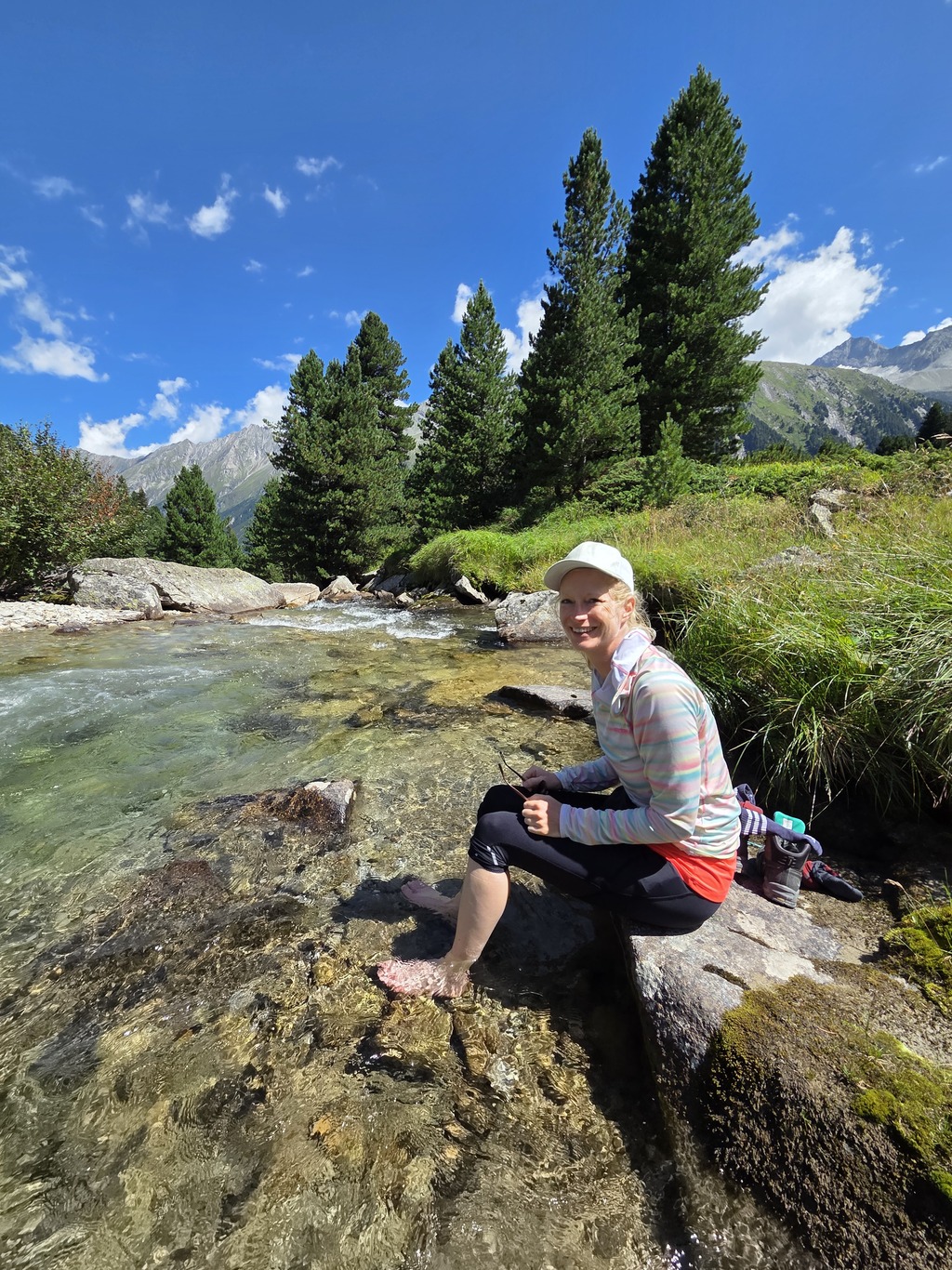
Over the years, I have also felt increasingly drawn to nature. I feel most at home in the mountains or surrounded by the natural landscape of Sweden. I practise yin and hatha yoga, completed a permaculture course and try to make space for natural processes in my everyday life as well — our garden on the outskirts of Enschede has gradually become a small green jungle.


During my osteopathy training, I noticed how these interests increasingly came together. The more I learned about anatomy, physiology, embryological development and the relationships within the body, the more things seemed to fall into place. The idea that a body is not made up of separate parts, but functions as a continuously interconnected whole, strongly appeals to me.


I recognise the same principle in nature. An organism, an ecosystem or the human body can never be fully reduced to a single cause or one isolated part. We may never completely understand the complexity of how everything interacts — and perhaps we do not need to. What we can do is keep learning to observe and listen more carefully, and create the conditions that allow the body to function as well as possible.
Health and the human body have always had a personal significance for me as well. From a young age, I regularly experienced back problems, which eventually led to surgery for a herniated disc. Over the years surrounding this, I became familiar with different forms of treatment and experienced how conventional and complementary care can complement one another in valuable ways.


Osteopathy has played an important role in this for me personally.


Over the years, I have also felt increasingly drawn to nature. I feel most at home in the mountains or surrounded by the natural landscape of Sweden. I practise yin and hatha yoga, completed a permaculture course and try to make space for natural processes in my everyday life as well — our garden on the outskirts of Enschede has gradually become a small green jungle.


During my osteopathy training, I noticed how these interests increasingly came together. The more I learned about anatomy, physiology, embryological development and the relationships within the body, the more things seemed to fall into place. The idea that a body is not made up of separate parts, but functions as a continuously interconnected whole, strongly appeals to me.


I recognise the same principle in nature. An organism, an ecosystem or the human body can never be fully reduced to a single cause or one isolated part. We may never completely understand the complexity of how everything interacts — and perhaps we do not need to. What we can do is keep learning to observe and listen more carefully, and create the conditions that allow the body to function as well as possible.
Gezondheid en het menselijk lichaam hebben voor mij ook altijd een persoonlijke kant gehad. Sinds mijn jeugd had ik regelmatig rugklachten, die uiteindelijk leidden tot een herniaoperatie. In de jaren daaromheen maakte ik kennis met verschillende vormen van behandeling. Daarbij heb ik ervaren dat reguliere zorg en complementaire zorg elkaar waardevol kunnen aanvullen. 


Osteopathie heeft daarin voor mijzelf een belangrijke rol gespeeld.

Tegelijkertijd ben ik door de jaren heen steeds dichter bij de natuur komen te staan. Ik voel me het meest thuis hoog in de bergen of midden in de natuur van Zweden. Ik volgde opleidingen in yin- en hatha-yoga, deed een permacultuurcursus en ook thuis probeer ik ruimte te geven aan natuurlijke processen — mijn tuin aan de rand van Enschede is inmiddels een kleine groene jungle.


Tijdens mijn opleiding osteopathie merkte ik hoe deze interesses steeds dichter bij elkaar kwamen. Hoe meer ik leerde over anatomie, fysiologie, het embryologische ontstaan en de onderlinge samenhang binnen het lichaam, hoe meer kwartjes op hun plek vielen. De gedachte dat een lichaam niet uit losse onderdelen bestaat, maar functioneert als een voortdurend samenwerkend geheel, spreekt mij enorm aan.


Dat herken ik ook in de natuur. Een organisme, een ecosysteem of het menselijk lichaam is nooit volledig terug te brengen tot één oorzaak of één onderdeel. We zullen het samenspel ervan waarschijnlijk nooit helemaal begrijpen — en misschien hoeft dat ook niet. Wel kunnen we steeds beter leren kijken, luisteren en voorwaarden creëren waardoor het lichaam zo goed mogelijk kan functioneren.

Osteopathy as a profession

I completed the four-year full-time osteopathy programme at College Sutherland in Amsterdam. With each new part of the course, my curiosity and appreciation for the way the body functions continued to grow. For me, that ongoing process of learning is an important part of the profession. I do not expect ever to be “finished learning” — whether about osteopathy, the human body or the people I treat.

What you can expect from me

In my work, I find it important to give genuine attention to the person in front of me. I listen carefully, take the time to assess thoroughly and try to understand what may be going on at that moment. Qualities that come naturally to me — such as patience, empathy, curiosity and the ability to listen and observe closely — help me in this.

During treatment, I work calmly and attentively. I continuously feel how the body and tissues respond and adapt my treatment accordingly. For me, treatment is therefore not a fixed sequence of techniques, but a process of assessing, treating, reassessing and adjusting where needed.

It is always rewarding to see patients leave the treatment table feeling calmer and more relaxed. Moments like these are a reminder of how meaningful I find this work.